
Power & Travel · 2 min read
Choosing a UPS for a CPAP Machine
What to look for in a UPS for CPAP use, and why the type of output matters.
Read at your pace. Use this guide to form questions, not as a substitute for professional medical advice.
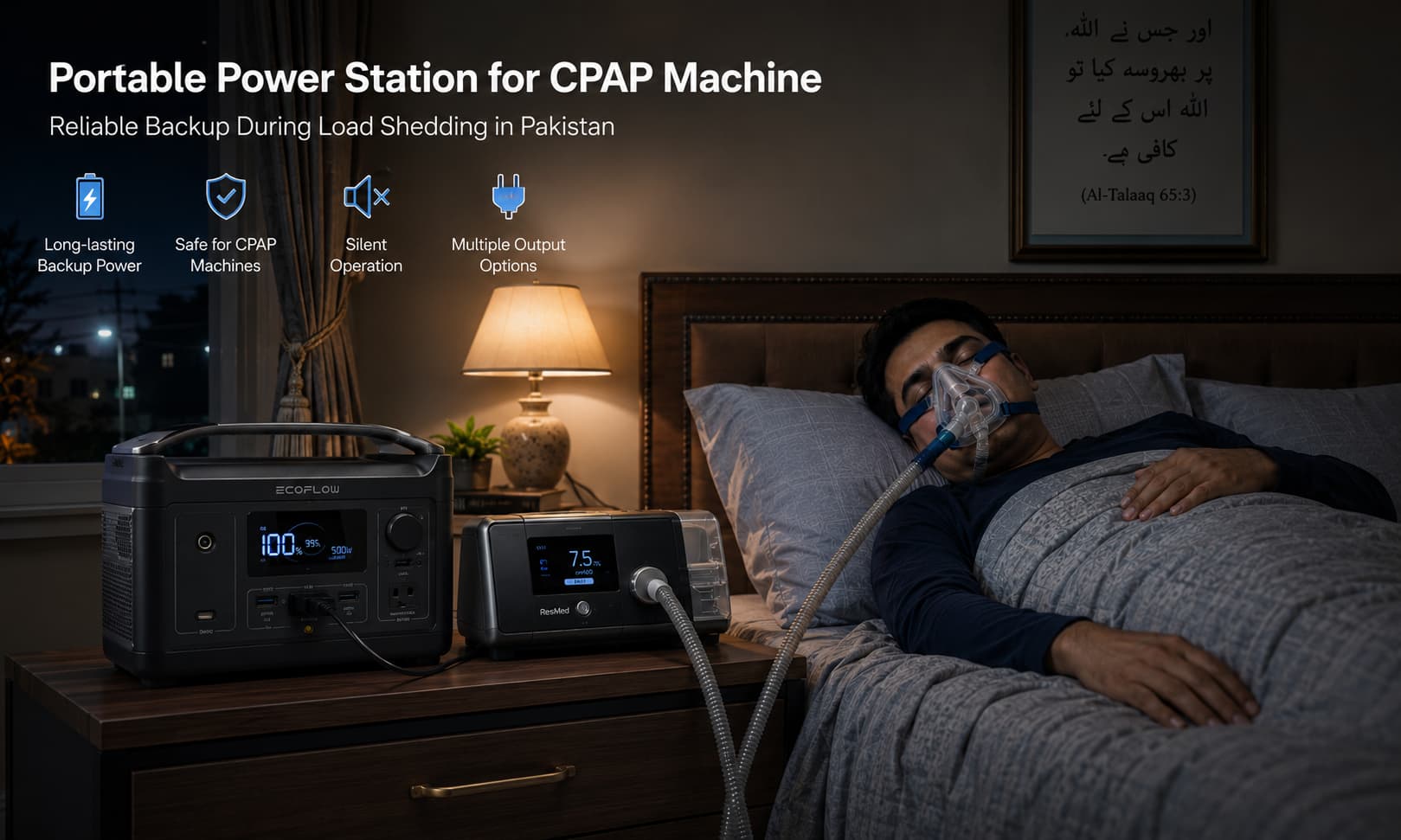
A UPS (uninterruptible power supply) is one option for keeping a CPAP machine running through a power outage — it sits between your machine and the wall outlet and switches to battery automatically when mains power drops. This is different from a dedicated CPAP battery pack; see our related guide on CPAP backup power in general for how the two compare.
Why the output type matters
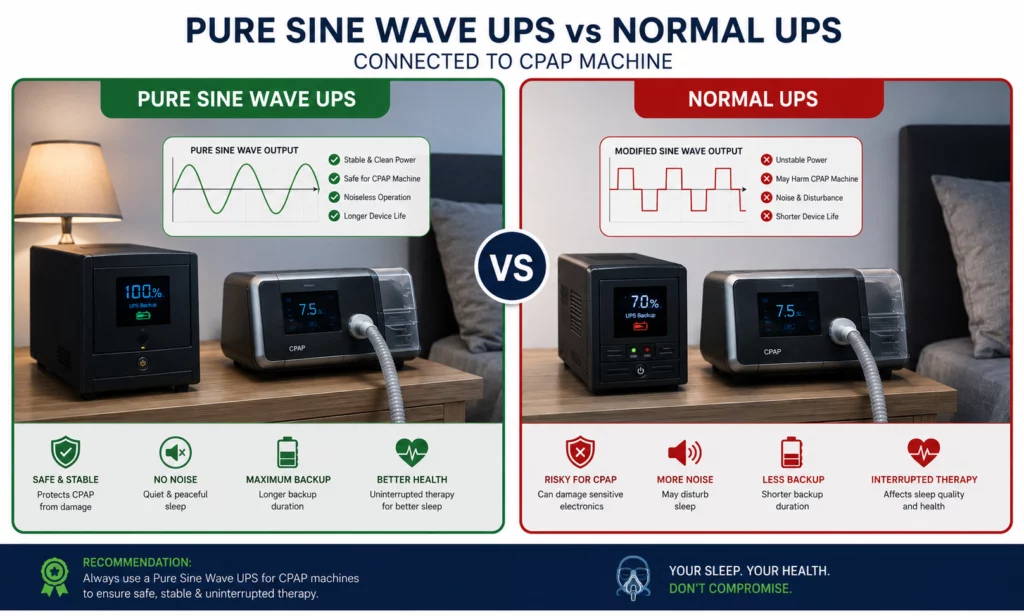
UPS units generally produce either a pure sine wave or a modified/simulated sine wave output. A pure sine wave more closely matches normal grid power, and is generally the safer, more compatible choice for sensitive electronics like a CPAP machine's motor. A modified sine wave UPS is usually cheaper, but manufacturers of medical devices commonly recommend pure sine wave power specifically — check your machine's own documentation, or ask the team, if you're unsure what your unit requires.
Other things to check
- Switchover time — how quickly the UPS takes over when mains power drops; a longer gap can interrupt the machine briefly.
- Runtime at your machine's actual power draw — a UPS rated for "a few hours" at low load may run out much sooner with a CPAP humidifier running.
- Capacity for your specific machine, since CPAP power draw varies by model and whether a humidifier or heated tube is in use.
Common mistakes to avoid
- Buying based on price alone without checking sine wave type or capacity.
- Ignoring your machine's actual power consumption, which determines how long a given UPS will realistically last.
- Assuming any UPS works the same — units vary significantly in output quality and reliability.
Getting the right one
Ask the CPAP Pakistan team what UPS or backup power options are currently available and suited to your specific machine — see CPAP accessories.